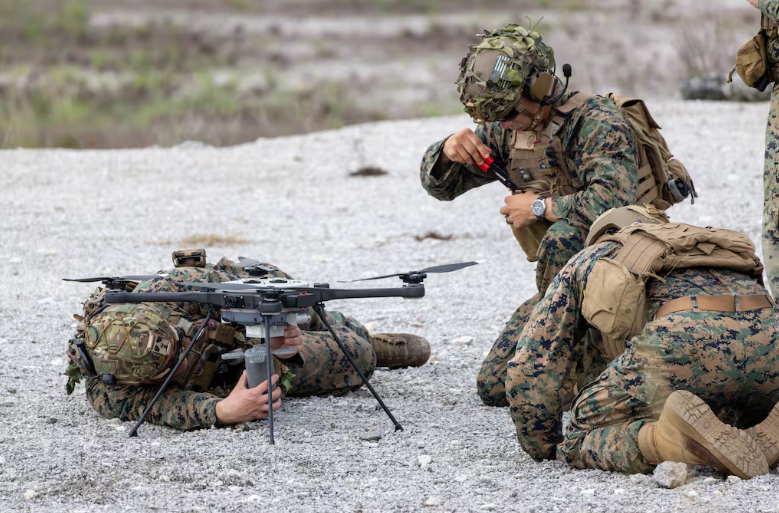
Adapting U.S. Forces for
Drone-Centric Warfare
Sharing Ukrainian Warfighting Experience
Three-Team Rotation Model
How the Three-Team Model Works
Forward Operational Exposure in Ukraine
One team operates in Ukraine alongside Ukrainian Special Forces Command, gaining direct exposure to the most advanced drone warfare battlefield currently in existence.
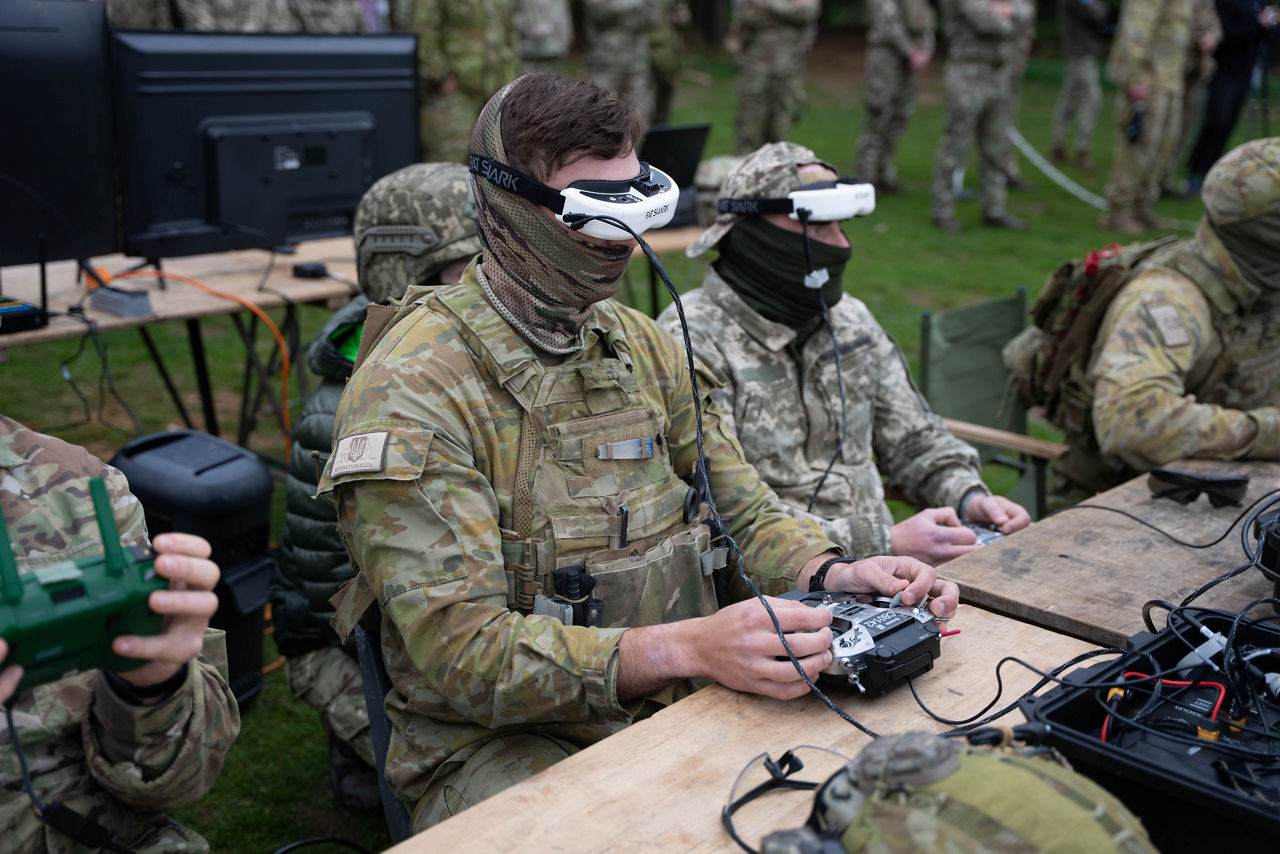
U.S.-Based Training and Instruction
A second team is positioned in the United States to transform frontline lessons into training delivery, tactical instruction, and operationally relevant education for U.S. defense and security stakeholders.

Review, Refinement, and Redeployment Preparation
A third team conducts structured review, extracts insights, updates training materials, refines methodologies, and prepares to re-enter the cycle.
Why This Matters Now
Ukraine Is the Most Valuable Operational Learning Environment in Modern Warfare
Ukraine is the clearest example of the state of modern warfare: expendable AI-assisted drones, electronic warfare, rapid adaptation, and mass production of drones. Ukraine is living and learning drone warfare — at scale, giving those operating in Ukraine the most advanced real-world drone warfare experience in existence.
The United States cannot afford to fall any further behind China in drone warfare practices. The U.S. should embrace the lessons from Ukraine. We propose a structured U.S.-Ukraine training partnership built around rotational, real-time extraction of tactics, techniques, and procedures (TTPs), and ultimately the establishment of a drone warfare schoolhouse.

Drone warfare evolves monthly
In a battlespace defined by rapid adaptation and constant change, the United States must capture these capabilities in real time to strengthen national preparedness.

The U.S. Is Still Training for Yesterday’s Threat
The danger is not technological inferiority alone. It is doctrinal and institutional mismatch.

U.S.–Ukraine Training Partnership
This program translates combat lessons into U.S.-relevant training modules while maintaining a continuous feedback loop between battlefield experience and instruction.
How the Program Works
From Combat Experience to Institutional Capability
Step 1
Battlefield immersion in Ukraine under real operational conditions
Step 2
Extraction of tactical and technical lessons as they emerge
Step 3
Translation into U.S.-relevant modules for training and force development
Step 4
Delivery to operational audiences across military and security institutions
Step 5
Continuous refinement through recurring rotation and structured feedback
Why This Matters Now
Built for a Wide Range of U.S. End Users
U.S. Special Operations Forces
Conventional Military Forces
Homeland Security
Homeland Defense
Law Enforcement
Strategic Return on Investment
A High-Leverage Modernization Investment
For approximately $25 million annually, the United States gains:
- complete strategic and tactical drone interoperability training;
- continuous battlefield observation assets;
- institutionalized adaptation cycle;
- SOF-focused drone integration capability;
- near real-time EW survival doctrine updates, and;
- scalable training across CONUS.
This proposal represents a low-cost, high-impact modernization accelerator. Failure to institutionalize these lessons risks multi-billion-dollar capability gaps and large-scale military and civilian losses in future conflicts. We further propose in-house analysis on collected reports for the purpose of recommendations for official changes to U.S. military doctrine.
Capture the Lessons of Modern Drone Warfare Before the Next Conflict Demands Them
Ukraine is generating the most important combat lessons in drone warfare available anywhere in the world today. The United States has a narrow opportunity to transform those lessons into readiness, adaptation, and doctrine before strategic surprise turns institutional delay into operational cost.
This proposal creates that mechanism.
The question is no longer whether drone-centric warfare will define future conflict. The question is whether the United States will act early enough to prepare for it on the terms reality has already set.